Their Great Gift: Courage, Sacrifice, and Hope in a New Land
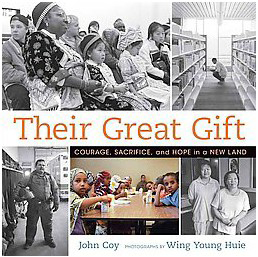
“My family came here from far away . . . because they dreamed of more,” begins the photojournalistic story documenting the experience of American immigrants. In Their Great Gift: Courage, Sacrifice, and Hope in a New Land, John Coy’s text accompanies Wing Young Huie’s photography as the two work together to explore the varied and diverse life and experience of immigrants of America.
The photographs show immigrants at work, with their families, communities, both young and old. The photographs are diverse in the communities and experiences represented. What a wonderful book to share how unique and yet similar we all are. Let’s look for similarities and compassion rather than excluding each other and closing our borders.
The end of the book features each contributor’s own immigrant experience either personally or within their family history. John Coy’s family is from Poland, Bavaria, Ireland, and Scotland. His great grandparents were both born in Bavaria, but met in Minnesota in the 19th century. Wing Young Huie, who is the only one of his siblings born in America, is a first generation Chinese American. Wing has been documenting the immigrant experience throughout his photography career, and you can see more of his photography on his professional website.
To get a copy of Their Great Gift, check you local bookstore, Powell’s, or your local library.
 I recently read Sarah Glidden’s nonfiction comic, Rolling Blackouts, published by Drawn & Quarterly in 2016, and it is one my favorite books this year. Glidden travelled through Turkey, Iraq, and Syria in 2011 along with two friends, reporters who had founded a journalism non-profit, and a Marine Iraqi War Veteran. Glidden documented their experience in beautiful watercolors and inked cartoon panels. The topics that Rolling Blackouts explores covers everything from the middle east refugee crisis, the rebuilding or lack of rebuilding in middle eastern cities, the difficulties immigrants and refugees have experienced from their displacement, as well as how journalism and reporting fits in with all of it. Glidden’s traveling companions and journalists are as much her subjects as the Iraqi refugees they meet in their travels. What I thought was unique about Rolling Blackouts was the documentation of the journalist experience— what kind of story her companions were hoping to find, what kind of experience they had, and how that informed their perspective and either the stories they told or hoped to tell.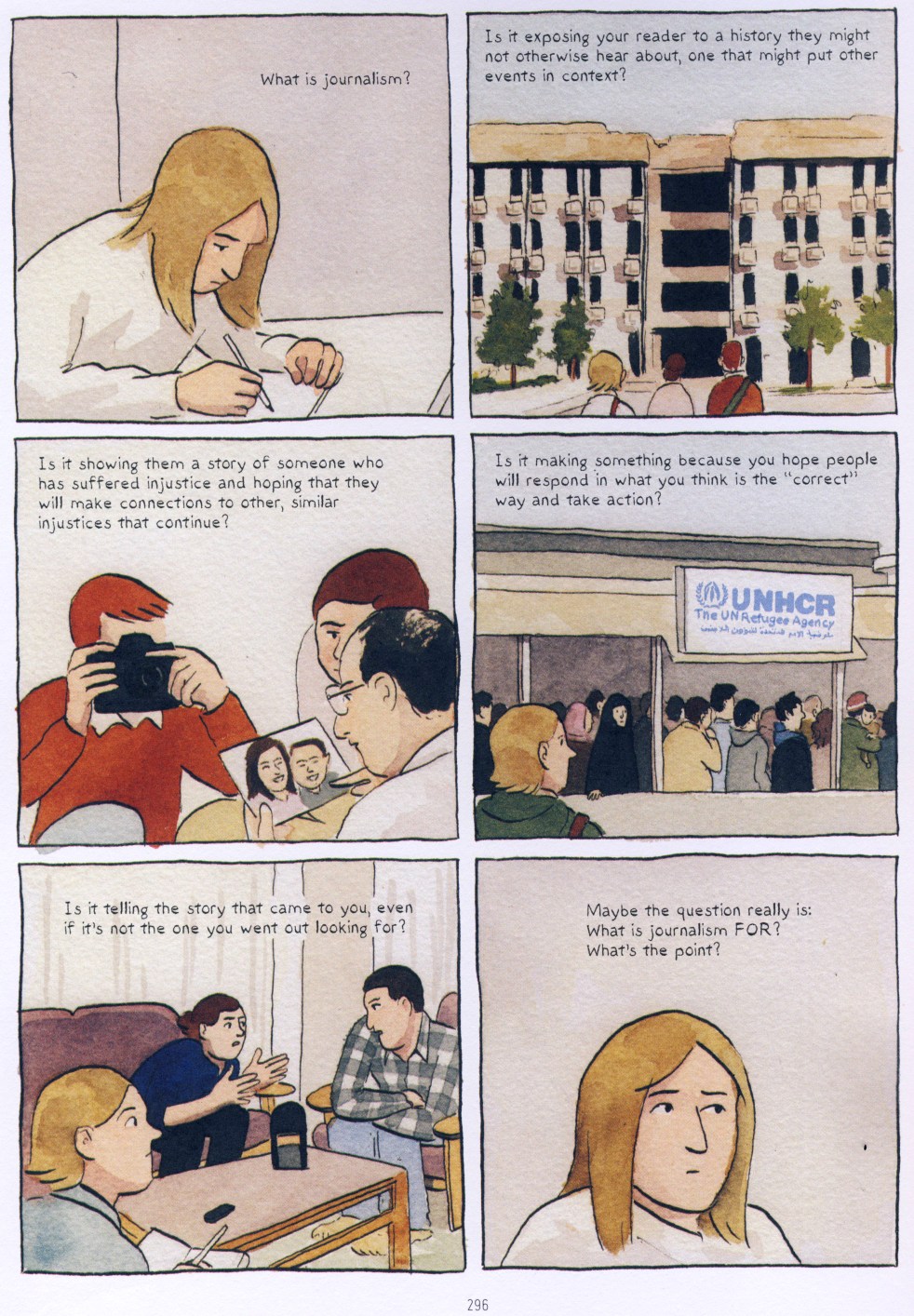

 The Empathy Bookclub